

The current technological age, especially with the advent of large language models, brings many difficulties — but in one respect it brings a great opportunity, one we should seize wherever we can. It has brought us to a moment when many things we took for granted are being called into question, and we now have a chance to look, in a fresh light of truth, at how we define and understand some of the most basic things. We are at a moment where we can get it right. A year ago, I couldn’t have imagined anyone listening to a discussion of fundamentals. There was never enough time for it. Now we must do it, and we should not miss the chance.
One of the central questions that currently seems to have no settled answer is: what is the purpose of education? It’s not the first time the answer has been redefined. In the ancient world, education was meant to form good citizens, cultivating virtue and striving for excellence in the disciplines of body and soul. In the Jewish world, its main purpose was to enable people to read religious texts, debate them, and transmit the faith across generations. In the Middle Ages, it was meant to help achieve salvation. The Renaissance revived the ancient ideals, while the Reformation revived the idea that all believers should be able to read the Bible directly, given the priesthood of all believers. During the Enlightenment, education became a tool of progress, freeing people from ignorance and superstition and turning them toward self-improvement and an experimental, scientific vision of the world. In the nineteenth century, its purpose was to produce organized armies of literate soldiers, loyal citizens, and disciplined workers for industrializing economies. Over time, its purpose also became leveling the playing field — a drive that culminated in the twentieth century, when it fused with a push to equalize access, so that people could actually exercise their equal rights.
This overview can leave today’s non-believers confused — and believers even more confused than before. With the coming of AI, the former cannot help but question the true value of practical skills, some or most of which seem likely to be replaced by intelligent machines. At the same time, poetry and rhetoric are no longer status symbols, as they were in the ancient world or during the Renaissance; salvation strikes them as void, and that disposes of the Bible as well — all of which can only reinforce the subconscious notion that basic literacy has become severely overrated. It seems the heirs of kings and industrialists could well do without anyone’s contribution, which leaves ordinary folk with one logical option: to become experts in cosmetics, bodybuilding, healthy food, and the substances and gadgets that enhance various forms of pleasure.
Believers, on the other hand — on top of the potential crisis of vocation we all share — may find the whole heritage a bit overwhelming, since it is not within the means of many to absorb Bible study, or the Thomistic theology of the Middle Ages, which cannot be cleanly separated from the ancient philosophical discourse on virtues. How about the little ones, many dare to ask — those of whom the Lord Jesus said:
“I praise you, Father, Lord of heaven and earth, because you have hidden these things from the wise and learned, and revealed them to little children.”
Matthew 11:25
Many of us feel little enough to have the truth revealed to us, yet Catholics — myself included — almost experience vertigo when listening to all the Thomistic intricacies, which can turn what we used to consider a plain A into a quite complex and intricate non-A. There are dozens of YouTube channels, among others, churning out complex, counter-intuitive rulings on our souls with their sharply discerning judgments. Are my little kids supposed to understand these in detail too? And what about the elderly, or the mentally impaired, some of whom might strike one as living angels?
These lines must be gratifying for some of the religious experts to read, giving them the feeling of bold, strong eagles flying high above, looking down on people like you and me. Eagles don’t experience vertigo.
In my country, all boys play soccer, a game I’m as untalented at as one can possibly be — perhaps even more so. But it’s just a game. Would God really design the content of the faith so that most of us are left feeling as incompetent as Christians as I am as a soccer player? I couldn’t worship such a God.
If you’ve ever read anything I’ve written, it should be obvious that I’m no great enthusiast either of those who suggest we throw all the doctrines out the window and simply hug one another and be nice. But I can sense there must have been something utterly dehumanizing in the way we have conceived of education across the ages. Something that once cast those deemed incapable of growing into virtuous citizens off the rock at birth; something that left unbaptized children hanging indefinitely in Limbo; something that once made human robots of Prussian soldiers and factory workers; something that kills babies in their mothers’ wombs through the materialization of gender equality as "reproductive rights"; something that once crucified God himself.
I think I may have come across the root cause quite recently — the very point that was meant to hide the truth from us by piercing the little ones. It was while re-reading Magnifica Humanitas, the first encyclical of Pope Leo XIV, that it dawned on me. There the Pope decries the constant striving for greater efficiency and productivity as a process that dehumanizes and leads toward transhumanism, posthumanism, and the elimination of the weak.
We all too often treat our lives as a kind of sport. The tendency runs deep: in ancient Greece and Rome people strove to become athletes, and later, among the Pharisees, moral athletes of a sort. Believers inspired by Thomism wanted every box in their faith checked, everything in order. More modern people wanted to take on the role of the kybernetes, the helmsman steering between right and wrong, to master math, physics, and biology, to dominate the world and bring it fully under control. It seems that throughout history we keep striving to make ourselves into a perfect Swiss Army knife, with a tool for every task: laser-sharp, virtuous, and free of sin. And we lean on education to get us there, to open the possibility of growing into our full potential, believers and non-believers alike.
It’s a great mistake.
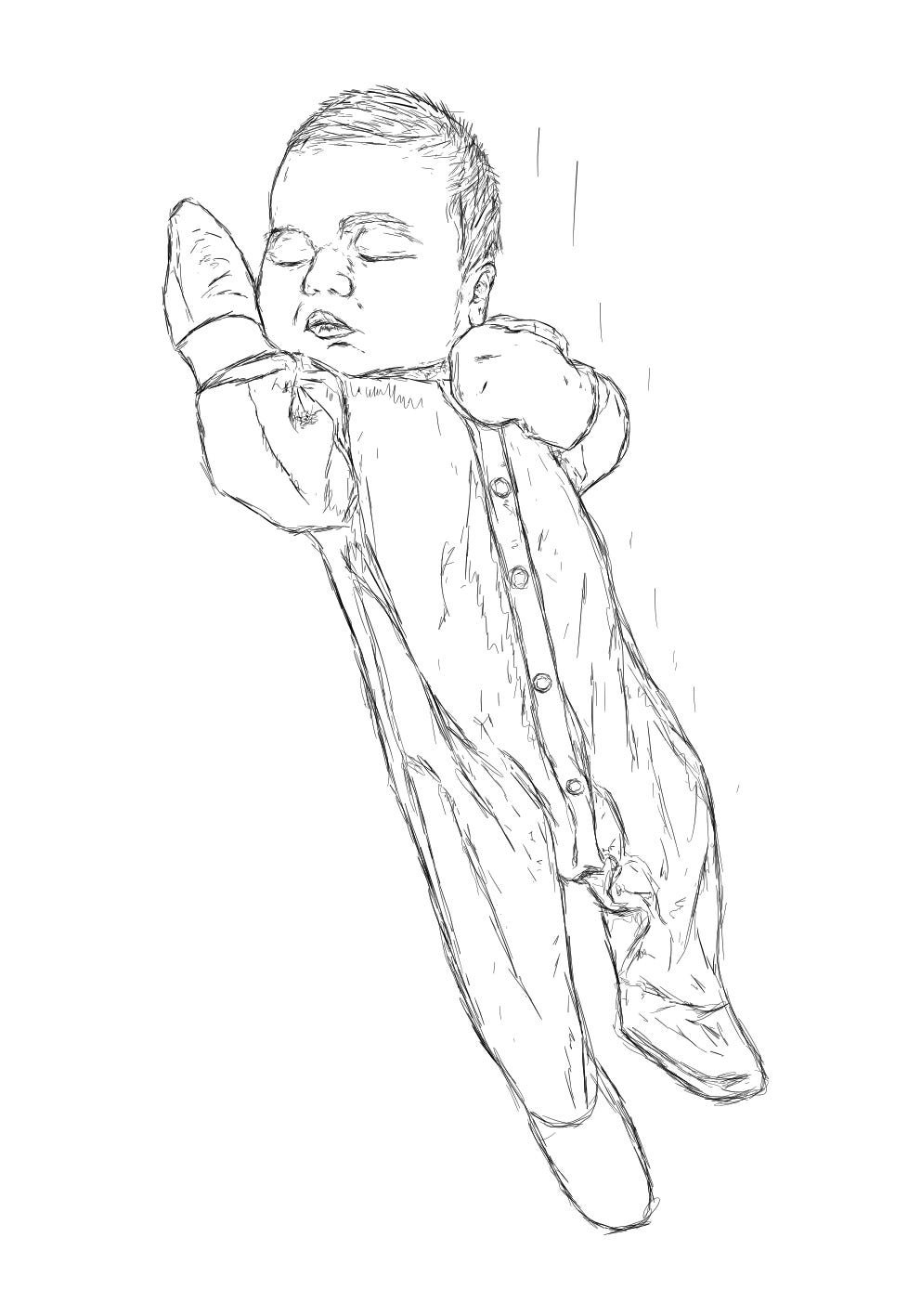
I believe the Lord Jesus meant it quite literally when He said the truth had been revealed to the little ones. Little children are not laser-sharp, virtuous Swiss Army knives; they are helpless and weak. They are so unendowed with skills that they cannot become, even in the slightest, an obstacle blocking the God who lives in their hearts. This is when the truth is revealed to us — when we stop being an obstacle to God and, in our smallness, let Him act through us, as children do.
This world has no need of human Swiss Army knives, fully developed, ultra-versatile, and devoid of any impairment. That is not holiness; it is a parody, akin to Homer Simpson’s car. Each of us is born into a very specific situation, meant to play a very specific role at a very specific moment. God does not need Titans of skill and virtue — He never chose such people anywhere in the Bible. What He wants is for us to stop being an obstacle to Him, and to let Him act through us. And that, primarily, is what education is meant to serve: to help us stop being an obstacle in that particular time and place we find ourselves in.
This is why you need to understand how the world around you works. These days, for example, you need to be literate in technology even if you hate it. You also need to be able to empathize with the people you live close to — to imagine how it feels to be in their shoes. Sometimes sharing a part of life with them will help; sometimes reading novels will help too, if they give truthful testimony. You need to study the best-known stories of humanity, since these can show you what basic dimensions there are in our shared humanity. You need to discover those same dimensions in yourself — but then you need to be curious about the particular situation you find yourself in. And most of all, you need to be able to eliminate as many self-deceptions as possible. You may not be able to root out a certain kind of sin, but at least you should be aware of it. The Catechism can be instrumental in that, but keeping a legalistic score may itself make you an obstacle.
Not everyone needs the same level of education. Children can be perfectly holy without any education at all. But the more gifted you are, the more education you need. To operate certain kinds of vehicles, or even a gun, you have to study, be examined, and have a license issued. Certain kinds of talent and intellect can make a person a far more consequential vessel — carrying either love or destruction — and you may need training so as not to pose a significant danger to those around you. You did not choose your talents and intellect; you were gifted them. Now you need to educate yourself to make sure you use them wisely.
Perfection dehumanizes. Education is not here primarily to make you perform better, to raise your scores on key metrics across the physical, mental, and moral dimensions. It is much more like reading a manual of who you specifically are: what your particular limits are, what skills and missions may be asked of you at particular seasons of your particular life, and what dimensions of that life you are called to sacrifice.
This is how we ought to see the future of education: as a tool that helps each individual stop being an obstacle to the God who dwells in their heart. It is the fruit of a labor that little children — and those who strike us as living angels — already have for free.
Literally, as the Lord Jesus said.